
Showing posts with label Protein Design. Show all posts
Showing posts with label Protein Design. Show all posts
Monday, May 20, 2019
The pH responding proteins
The changes in the environment acidity may lead to important protein conformational changes, even unfolding. Accounting for this effect in silico is a real challenge. A recent paper from the group of D. Baker shows how by modelling the distribution of histidine residues in the network of hydrogen bonds that stabilises the fold of a protein is possible to control the response of a protein to pH changes. The paper is out in the Science magazine here. The possibility to account in simulations for pH has inspired also several computational approaches along the years. Very recently titration method combined to coarse-grained MD simulations was demonstrated to be a cheap but effective strategy in both the simulation of RNA [see Pasquali et al, Interface Focus, 2019, here] and proteins [see Barroso et al, JCTC, 2019, here].


Wednesday, May 25, 2016
Millennium Technology Prize for Direct Evolution
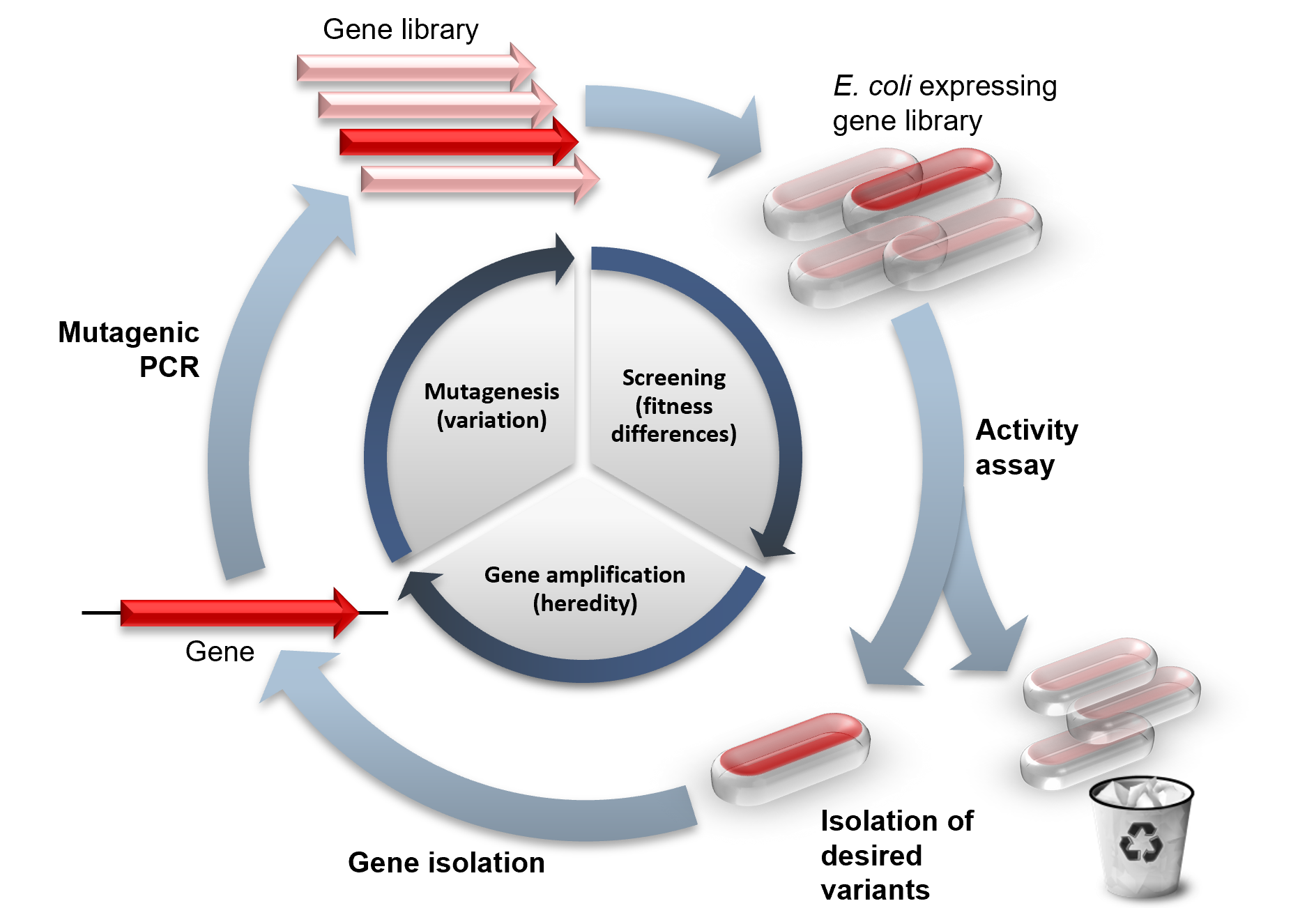
This year the Millennium Technology Prize was received by Frances Arnold for the development of the direct evolution technique, an approach that allows to evolve in vitro enzymes mimicking the process of natural evolution, and select mutants with desired properties. Read here the details of the prize. This is a great news. I am not an expert of the field but along the years I enjoyed the work of F. Arnold focusing on the design of thermostable enzymes. Too many articles to refer to, so it is easier to get a look here at the long publication list of the author.
Tuesday, November 17, 2015
Over 100°C
 What factors contribute to protein stability at very extreme temperatures? What gain comes from entropy and enthalpy? And how to account for the delicate effect of temperature on molecular interactions like the hydrophobic and ionic ones? All this is tackled in a very intriguing work by Y. Matsura et al. "Thermodynamics of protein denaturation at temperature over 100°C: CutA1 mutant proteins substituted with hydrophobic and charged residues" recently published in Scientific Reports [see here]. By designing sequential mutations the authors were able to construct hyper-stable versions of the CutA1 protein and to extract the main thermodynamic parameters characterising their thermal stability. It is a very important work challenging both technical biochemical problems, like the aggregation of proteins generally occurring above 80°C, and the basic thermodynamics controlling protein stability over 100°C where for instance hydrophobic interactions cease to be entropically driven and ion-pairing can benefit from water dielectric constant decrease.
 Monday, May 18, 2015
Designing thermal stability via non-equilibrium simulations
The design of protein thermal stability is appealing for practical uses.
In a recent work [1] by Tian, Woodard, Whitney and Shakhnovich [see here] non-equilibrium Monte Carlo simulations were
effectively used to explore mutations of the Dihydrofolate Reductase
(DHFR) and their impact on both the stability and functionality of the
enzyme.
The key point of the work is the use of non-equilibrium Monte Carlo (MC) simulations. A protein is excited at different temperatures and its
"unfolding " as function of MC steps is recorded.
For each temperature, the average value of a given observable or order
parameter that describes the state of the protein, ie the root mean
square displacement with respect to the native state, the energy, the
gyration radius, depends on the simulation length -in the specific case
the number of MC steps. This relates to the fact that the transition
from the folded to the unfolded state, for a given temperature, is rate
limited by the free energy barrier dividing the two states. How this
dependence can be washed up when considering the effect of mutations?
The authors proved a nice recipe: first, a mutation affects the
thermodynamics of the system, formally the free energy difference
between folded and unfolded state, but also the kinetics for the
folded/unfolded transition, aka the free energy barrier dividing the two
state. It is possible to image that the thermodynamic effect is
mirrored on the change of free energy barrier via a scaling factor that measures
how the mutation influences the transition state of the folding/unfolding process.
Secondly, when considering the non-equilibrium MC simulations for both the
wild type and the mutant, the shift of the apparent melting temperature
(the temperature leading unfolding) of the mutated system with respect
to WT results independent from the simulation length. This can be formally showed, and the reader is invited to dig the work.
Using this strategy several mutations stabilizing the protein and that
maintain functionality were identified. I wonder whether this approach
can be used straightforwardly also for estimating the effect of
mutations on mechanical stability.
 |
| Schematic view of the free energy profile for the folded (N) unfolded (U) states as it is pictured in Fig. 1 of Ref. 1 |
[1] J. Tian, JC Woodard, A. Whitney, EI Shakhnovich, Plos Comp Bio (2015) 11, e1004207.
Tuesday, March 3, 2015
Protein Design
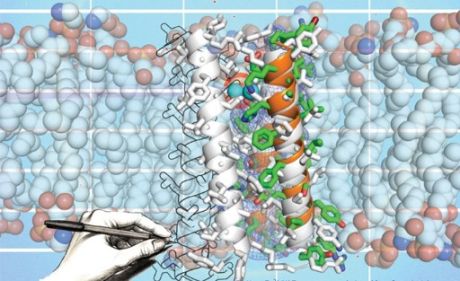
Extremophilic proteins represent a natural template to understand how enzymatic activity can be performed in non conventional conditions, i.e. high temperature, high salt concentration, low temperature, high pressure. Evolution has driven this migration of protein sequences/folds toward optimal states for different environments. How 'artificial evolution' can do the same job? In other words, how protein design can succeed in mutating proteins for changing their working milieu, or even incorporate new chemical activity? I propose to the readers two interesting reviews on this subject. One is from J.G. Saven group [1], the other from D. Baker and K.N Houk [2]. It is amazing how leading groups in the field have advanced the research combining multiple approaches. Enjoy!
[1] I. Samish, C.M. MacDermaid, J.M. Perez-Aguilar, J.G. Saven, Ann.Rev.Phys.Chem. (2011) 62, 129-149. (here)
[2] G. Kiss, N. Celebi-Olcum, R. Moretti, D. Baker, and K.N. Houk, Angew. Chem. Int. Ed. (2013) 52, 5700-5725. (here)
Thursday, March 27, 2014
There cannot be only one
Is it hydrophobics or electrostatics? Is it in structure or in dynamics? Is it an enhanced rigidity or an increased flexibility of the protein matrix? Maybe the answer is in water?
Relevant scientists might not agree on what factor plays the most important role in increasing thermal stability of (hyper)thermophilic proteins, but they all agree that not only one is overall responsible. The enhanced thermal stability of a thermophilic protein is usually a result of a well-orchestrated symphony of more than one structural and/or dynamical factors.
Even so, several experiments have demonstrated that, in some cases, single point mutations are capable of increasing the thermal stability of an enzyme. Whenever that is possible, it does come in handy, since a thermophilic enzyme with the desired properties doesn’t always exist or even if it exists it is not trivial to obtain. So we go back to studying how thermophilic proteins are mastering it. After all, it gets down to identifying trends that are immediately applicable for a rational design.
Even so, several experiments have demonstrated that, in some cases, single point mutations are capable of increasing the thermal stability of an enzyme. Whenever that is possible, it does come in handy, since a thermophilic enzyme with the desired properties doesn’t always exist or even if it exists it is not trivial to obtain. So we go back to studying how thermophilic proteins are mastering it. After all, it gets down to identifying trends that are immediately applicable for a rational design.
Such a useful trend was recently presented by H. Gohlke and coworkers advocating for the importance of “qualitative” hydrophobic contacts on protein stability. By qualitative contacts the authors mean - and effectively demonstrate - that it is not the size of clusters of hydrophobic residues that distinguishes (hyper)thermophilic proteins from their mesophilic homologues. It is rather the fact that thermophilic, and even more hyperthermophilic proteins, are enriched in those hydrophobic contacts that have a low (favorable) energy. With this, they achieve in distinguishing thermophilic over mesophilic proteins with a discrimination accuracy of 80%, something that is not achieved as well when they use other energy components such as hydrogen bond energy for example.
Finally and most importantly, the authors successfully locate weak spots on three different proteins where mutations will lead to an increased thermal stability, as well as non-weak spots that should not be mutated as they already stabilize the protein. Moreover, the computational efficiency with which this can be done makes the method a potentially very useful tool for protein design.
 |
| A droplet of water forms a spherical shape, minimizing contact with the hydrophobic leaf. Photo taken by tanakawho |
Saturday, March 22, 2014
Towards new thermostable proteins
ResearchMedia just published an highlight of the project THERMOS. The article "Towards new thermostable proteins" is in the new issue of the magazine International Innovation and can be read here (courtesy of RM). The article presents a nice overview of the project, a short description of what done so far and more importantly the lines of research we are following. Enjoy it!

Monday, November 11, 2013
Ideal proteins?
How do proteins form or maintain a unique fold, stable and biologically preferred when at the same time the unfolded or misfolded states are the vast majority of the possible conformations? We know that the information of the three dimensional structure of a protein is encoded in its amino acid sequence (Anfinsen's dogma) [1]. In particular, the funneled energy landscape approach prescribes that amino-acid sequences tend to choose the three dimensional structure that minimizes their free energy. But not everybody embraces the folding-funnel approach, especially since it has been well known that for most proteins the free energy difference between the folded and the unfolded states is only marginally negative [2]. At the same time the protein folding problem has been suggested as an NP-complete one [3], or otherwise no fast solution to it is known, while at the same time nature copes with it very efficiently in biological systems.
So the question remains. Or doesn’t it?
It seems that, through the field of protein design, the recent approach of Baker and colleagues [4] gave a big push towards the answer. The ansatz was: forget about the sequence; there must be a mapping or a relation between specific secondary structure patterns and tertiary structure motifs. Indeed, the authors formulated concrete, unambiguous rules connecting the alternation and length of 2 or 3 secondary structure elements with their supersecondary structure. Specifically, they first defined the notion of chirality (left or right) for the motif βlβ and the notion of orientation (parallel or antiparallel) for the motifs βlα and αlβ, where β, α and l stand for beta, alpha and loop respectively. They then gave the three following fundamental rules.
1) βlβ rule: the chirality of β-hairpins is determined by the length of the loop between the two strands. Two- and three-residue loops almost always give rise to left-hairpins, whereas five-residue loops give rise primarily to right-hairpins.
2) βlα rule: The preferred orientation of βlα-units is parallel for two-residue loops and antiparallel for three-residue loops.
3) αlβ rule: The preferred orientation of αlβ-units is parallel.
At a next level of complexity, from these 3 fundamental rules follow 4 emergent rules concerning βlβlα-, αlβlβ- or βlαlβ-units. Their validation included both Rosetta folding simulations of sequence-independent backbone models as well as analysis of motifs in known protein structures. Both approaches were in agreement with each other. More notably, the authors, following strictly these rules, designed ab initio five different protein folds that exhibited extraordinary thermal stability reaching melting temperatures greater than 95 C. They thus called these models “ideal”.
What triggered a subsequent, recent work by L. Vitagliano and coworkers [5], was the fact that naturally occurring proteins might not follow the rules as strictly as in the above designing, they are however - even if marginally - stable. The overall analysis of crystal structures from the thermophiles Thermotoga maritima, the genus Pyrococcus and the genus Sulfolobus, revealed an adherence to the above rules, with the notable over-representation of the βlβ-l2 (i.e. two-residue loop), a state with exclusive preference for left-chirality.So could the adherence to those rules be driving an evolutionary selection for thermostable proteins? It is possible. Let’s not forget at this point that there is no divine hand defining these rules. As the authors of [4] note, they follow from either minimization of torsional strain or backbone bendability. And this is also the reason why proteins that follow these rules not only have stable native states but also unstable non-native states, a fact partially responsible for the funnel-shaped resulting energy landscapes. A question that naturally arises from Baker’s group's result concerns the functionality of the designed proteins at ambient temperature or not. It is either outside the scope their work or it is implicitly assumed that since one can drive the fold (and decide of course on the sequence) he can design proteins with the desired function. But protein function requires the appropriate, or let’s say the perfect, amount of flexibility. It was very nicely demonstrated by Hans Frauenfelder and co-workers [6] that protein dynamics is slaved by both the hydration shell and the bulk solvent, it is thus controlled by the solvent viscosity which in turn depends on the temperature. As the authors in [5] note, “exceptions to the (above) rules are not rare in naturally thermostable proteins. This observation suggests that in these cases a certain level of “frustration” is likely essential for proteins to carry out their biological functions.”
Bottom line, could we ever succeed in mimicking nature exactly? All it takes after all is to mimic its perfect deviation from the rules.
[1] C.B. Anfinsen, The formation and stabilization of protein structure. Biochem. J. 1992, 128(4), 737-749.
[2] A.D. Robertson and K.P. Murphy, Protein Structure and the Energetics of Protein Stability. Chem. Rev. 1997, 97, 1251−1268.
[3] B. Berger and T. Leighton. Protein folding in the hydrophobic-hydrophilic (hp) is np-complete. In Proceedings of the second annual international conference on Computational molecular biology, RECOMB ’98, pages 30–39, New York, NY, USA, 1998. ACM
[4] Koga N, Tatsumi-Koga R, Liu G, Xiao R, Acton TB, Montelione GT, Baker D (2012) Principles for designing ideal protein structures. Nature 491:222–227.
[5] Balasco N, Esposito L, De Simone A, Vitagliano L., "Role of loops connecting secondary structure elements in the stabilization of proteins isolated from thermophilic organisms", Protein Sci. 2013 Jul;22(7):1016-23. doi: 10.1002/pro.2279.
[6] Hans Frauenfelder, Guo Chena, Joel Berendzena, Paul W. Fenimorea, Helén Janssonb, Benjamin H. McMahona, Izabela R. Stroec, Jan Swensond and Robert D. Younge, A unified model of protein dynamics, vol. 106 no. 13, 5129–5134 (2008)
So the question remains. Or doesn’t it?
It seems that, through the field of protein design, the recent approach of Baker and colleagues [4] gave a big push towards the answer. The ansatz was: forget about the sequence; there must be a mapping or a relation between specific secondary structure patterns and tertiary structure motifs. Indeed, the authors formulated concrete, unambiguous rules connecting the alternation and length of 2 or 3 secondary structure elements with their supersecondary structure. Specifically, they first defined the notion of chirality (left or right) for the motif βlβ and the notion of orientation (parallel or antiparallel) for the motifs βlα and αlβ, where β, α and l stand for beta, alpha and loop respectively. They then gave the three following fundamental rules.
1) βlβ rule: the chirality of β-hairpins is determined by the length of the loop between the two strands. Two- and three-residue loops almost always give rise to left-hairpins, whereas five-residue loops give rise primarily to right-hairpins.
2) βlα rule: The preferred orientation of βlα-units is parallel for two-residue loops and antiparallel for three-residue loops.
3) αlβ rule: The preferred orientation of αlβ-units is parallel.
At a next level of complexity, from these 3 fundamental rules follow 4 emergent rules concerning βlβlα-, αlβlβ- or βlαlβ-units. Their validation included both Rosetta folding simulations of sequence-independent backbone models as well as analysis of motifs in known protein structures. Both approaches were in agreement with each other. More notably, the authors, following strictly these rules, designed ab initio five different protein folds that exhibited extraordinary thermal stability reaching melting temperatures greater than 95 C. They thus called these models “ideal”.
What triggered a subsequent, recent work by L. Vitagliano and coworkers [5], was the fact that naturally occurring proteins might not follow the rules as strictly as in the above designing, they are however - even if marginally - stable. The overall analysis of crystal structures from the thermophiles Thermotoga maritima, the genus Pyrococcus and the genus Sulfolobus, revealed an adherence to the above rules, with the notable over-representation of the βlβ-l2 (i.e. two-residue loop), a state with exclusive preference for left-chirality.So could the adherence to those rules be driving an evolutionary selection for thermostable proteins? It is possible. Let’s not forget at this point that there is no divine hand defining these rules. As the authors of [4] note, they follow from either minimization of torsional strain or backbone bendability. And this is also the reason why proteins that follow these rules not only have stable native states but also unstable non-native states, a fact partially responsible for the funnel-shaped resulting energy landscapes. A question that naturally arises from Baker’s group's result concerns the functionality of the designed proteins at ambient temperature or not. It is either outside the scope their work or it is implicitly assumed that since one can drive the fold (and decide of course on the sequence) he can design proteins with the desired function. But protein function requires the appropriate, or let’s say the perfect, amount of flexibility. It was very nicely demonstrated by Hans Frauenfelder and co-workers [6] that protein dynamics is slaved by both the hydration shell and the bulk solvent, it is thus controlled by the solvent viscosity which in turn depends on the temperature. As the authors in [5] note, “exceptions to the (above) rules are not rare in naturally thermostable proteins. This observation suggests that in these cases a certain level of “frustration” is likely essential for proteins to carry out their biological functions.”
Bottom line, could we ever succeed in mimicking nature exactly? All it takes after all is to mimic its perfect deviation from the rules.
[1] C.B. Anfinsen, The formation and stabilization of protein structure. Biochem. J. 1992, 128(4), 737-749.
[2] A.D. Robertson and K.P. Murphy, Protein Structure and the Energetics of Protein Stability. Chem. Rev. 1997, 97, 1251−1268.
[3] B. Berger and T. Leighton. Protein folding in the hydrophobic-hydrophilic (hp) is np-complete. In Proceedings of the second annual international conference on Computational molecular biology, RECOMB ’98, pages 30–39, New York, NY, USA, 1998. ACM
[4] Koga N, Tatsumi-Koga R, Liu G, Xiao R, Acton TB, Montelione GT, Baker D (2012) Principles for designing ideal protein structures. Nature 491:222–227.
[5] Balasco N, Esposito L, De Simone A, Vitagliano L., "Role of loops connecting secondary structure elements in the stabilization of proteins isolated from thermophilic organisms", Protein Sci. 2013 Jul;22(7):1016-23. doi: 10.1002/pro.2279.
[6] Hans Frauenfelder, Guo Chena, Joel Berendzena, Paul W. Fenimorea, Helén Janssonb, Benjamin H. McMahona, Izabela R. Stroec, Jan Swensond and Robert D. Younge, A unified model of protein dynamics, vol. 106 no. 13, 5129–5134 (2008)
Subscribe to:
Posts (Atom)